You know that feeling when you find the perfect pair of skinnies — they hug every curve exactly right, the stretch is substantial but not baggy, and you feel like your legs go on forever — and then you flip over the tag and it says $220? Or the opposite: you grab a $35 pair on impulse and they’re saggy at the knees by week three? Both outcomes are essentially the same problem: you didn’t run the math before you bought. Cost-per-wear is a simple framework — take the purchase price, divide it by the number of times you realistically expect to wear the item before it wears out or gets retired, and you get a per-use cost that tells you which “expensive” pair is actually cheaper in the long run. Stretch skinny jeans — the close-fitting, ankle-grazing cut that uses an elastane or spandex blend to move with your body — are the single category where this math swings the most dramatically, because fabric quality determines whether the stretch recovers (snaps back to shape) or permanently bags out. This guide runs those numbers across three real price tiers, names the tradeoffs explicitly, and gives you a clear if-this-then-that decision rule at the end.
Why Stretch Recovery Is the One Spec That Changes Everything
If you’ve been buying denim for a while, you already know the vocabulary: elastane content (the percentage of spandex-type fiber woven into the fabric), fabric weight (how heavy the denim is, typically measured in ounces per square yard), and recovery (the fabric’s ability to return to its original shape after being stretched). What you may still be building intuition around is how those three specs interact — and why getting that interaction wrong is what produces the dreaded knee-bagging by Thursday.
Here’s the relationship in plain terms: higher elastane percentage (above roughly 3–4%) sounds like it should mean more stretch and better recovery, but it often means the opposite. Heddels’ published guide to reading denim spec sheets notes that fabrics with very high elastane content — sometimes called “ultra-stretch” or “super-skinny” blends — tend to lose recovery faster because the elastane fibers fatigue under repeated tension. The sweet spot that aggregated owner reviews consistently identify is 2–3% elastane in a mid-weight fabric (roughly 9–11 oz), where the cotton structure does most of the work and the elastane simply allows comfortable movement without deforming the weave.
This is why two pairs at roughly the same price point can age completely differently. It’s also the first place the cost-per-wear math starts to diverge.
The Three Tiers, Side by Side
Let’s structure the comparison the way you’d actually shop it: by what you spend, what the specs say, and what owners report over time.
Tier One: $30–$75 — Levi’s, Lee, and Amazon Essentials
Levi’s 311 Shaping Skinny (typically $59–$79 at full price) and the Lee Sculpting Skinny (often found at $40–$60) represent the best of this bracket. Refinery29’s roundup of jeans under $100 consistently highlights the 311 for its waistband construction and moderate elastane content — Levi’s publishes the 311 as a cotton/polyester/elastane blend, with elastane typically at or under 3%. Owner reviews across major retailers note strong initial recovery that holds through roughly 80–120 wears before the knees begin to relax permanently.
By the numbers — Tier One:
| Pair | Avg. Price | Est. Wears Before Bagging | Cost-Per-Wear |
|---|---|---|---|
| Lee Sculpting Skinny | $48 | ~90 wears | ~$0.53/wear |
| Levi’s 311 Shaping Skinny | $69 | ~110 wears | ~$0.63/wear |
At $0.53–$0.63 per wear, these are genuinely strong value propositions — if you retire them honestly when they start to relax and don’t try to squeeze another season out of a bagging pair. The failure mode in this tier isn’t the upfront cost; it’s the sunk-cost trap of wearing degraded jeans too long because you don’t want to admit the $48 is gone.
The tradeoff to name explicitly: fabric weight. Lee and Levi’s budget-adjacent offerings tend to land in the 8–9 oz range, which means a slightly thinner hand feel and less structure when standing or sitting. Who What Wear’s editorial roundup on skinnies for different body types notes that lighter fabrics can be less flattering for readers who want compression and structure, which is a real fit variable, not a snob complaint.
Tier Two: $80–$160 — True Religion, Madewell, and AGOLDE’s Entry Stretch Cuts
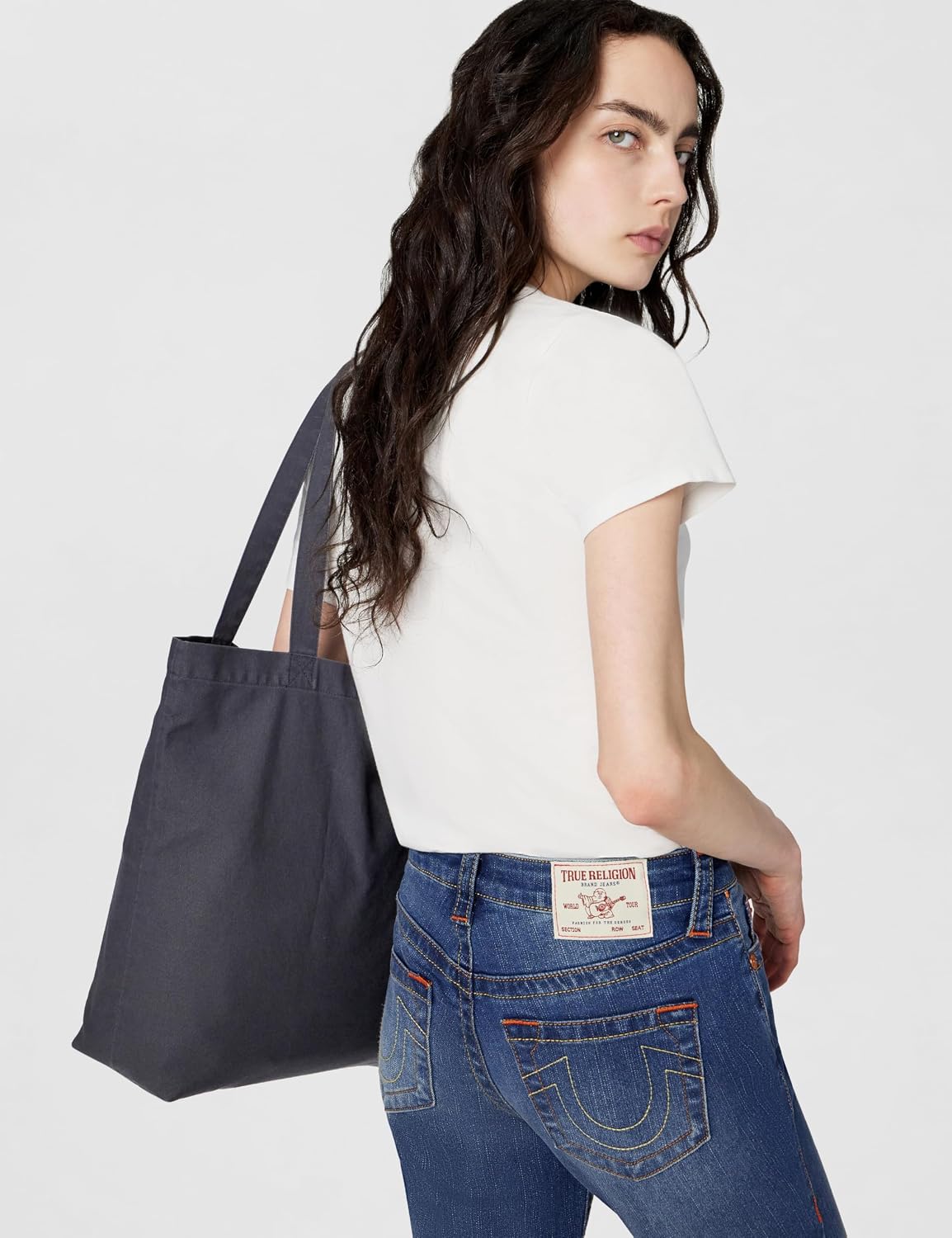
This is the tier where the cost-per-wear math starts to flip in interesting ways. True Religion’s Jennie Mid-Rise Skinny (typically $109–$139) uses a heavier fabric weight — brand spec sheets put it closer to 10–11 oz — with a controlled elastane percentage. Harper’s Bazaar’s editor roundup has cited True Religion’s skinny cuts as holding their shape notably well through repeated wear. Owner consensus on major retail sites shows very few complaints about knee bagging until well past 150 wears.
Madewell’s 10” High-Rise Skinny (approximately $128–$148) has a devoted following, and Vogue has placed it on multiple best-jeans lists. Published fabric composition shows a cotton/polyester/elastane blend; the design team has consistently landed in the 2–3% elastane zone based on posted spec data. Owners frequently note that the waistband doesn’t gap at the back — a structural fit win that is genuinely construction-dependent, not just sizing.
At an estimated 150–180 wears before meaningful shape loss, a $138 pair reaches a cost-per-wear of approximately $0.77–$0.92. That looks worse than Tier One on paper — but the math changes if you factor in that Tier Two pairs often get worn on heavier rotation because they feel better and therefore get pulled more often. If you wear the Madewell 120 days a year rather than the Lee’s 90, the practical lifespan extends and the per-wear cost drops toward $0.65.
AGOLDE’s 90s Pinch Waist occasionally dips into this tier on sale (full price is $188–$198, but it appears in the $140–$160 range during Friends & Family events). This is a boundary case — construction quality is closer to Tier Three, and owner reviews consistently describe the denim as feeling substantially heavier and more structured than anything in Tier Two. Worth flagging as a buy-on-sale target if the math makes you nervous about committing to Tier Three at full price.
Tier Three: $170–$280 — Frame, Paige, and Citizens of Humanity
At this level, the conversation shifts from “will it bag?” to “how does it evolve?” Paige’s Hoxton Skinny (typically $199–$229) uses proprietary stretch technology that the brand’s published specs describe as multi-directional — meaning the fabric stretches both along the leg and across it, rather than just in one direction. Aggregated long-run owner reviews consistently describe the Hoxton as maintaining its shape through 200+ wears, with the fabric developing a faded patina rather than simply degrading.
Frame’s Le Skinny de Jeanne (approximately $228–$268) is frequently cited by both Harper’s Bazaar and Vogue as a benchmark for how premium stretch denim should feel — substantial without stiffness, with seaming that keeps the silhouette clean even after the fabric relaxes over time. Published fabric data shows Frame working with slightly heavier base denim in the 11–12 oz range before the elastane blend is introduced, which supports the recovery story.
Citizens of Humanity’s Rocket Skinny (full price $228–$248) rounds out the tier. Heddels has referenced Citizens’ fabric sourcing as consistent with mid-premium Japanese and Italian mill relationships — a supply chain detail that correlates with the dye consistency and weight uniformity that owners describe in long-run reviews.
By the numbers — Tier Three:
| Pair | Avg. Price | Est. Wears Before Shape Loss | Cost-Per-Wear |
|---|---|---|---|
| Paige Hoxton Skinny | $219 | ~200 wears | ~$1.10/wear |
| Frame Le Skinny de Jeanne | $248 | ~200+ wears | ~$1.24/wear |
| Citizens Rocket Skinny | $238 | ~200 wears | ~$1.19/wear |
Yes, those per-wear numbers are higher than Tier One. The honest case for spending more here is not the per-wear math alone — it’s the confidence variable. Owner reviews for Tier Three pairs show dramatically fewer reports of fit anxiety over a two-year ownership period: less re-buying to replace a degraded pair, less time spent in changing rooms hunting for a replacement, less cognitive overhead. If you’ve been through the cycle of buying three $50 pairs in two years, you’ve already spent $150 and still don’t have a pair you love.
The Fit-by-Proportion Consideration Most Guides Skip
Fabric construction matters, but so does the rise-to-inseam ratio for your specific body. The stretch skinny format puts more stress on the thigh and knee area than any other cut — which means fabric recovery has to work harder for curvier thighs and longer torsos. Refinery29’s guides on jeans by body type consistently flag that high-rise skinnies with a higher back-rise measurement reduce waistband gap and distribute thigh stress more evenly, which correlates directly with longer fabric lifespan. Shorter inseam options (26”–28”) also reduce the length of fabric under tension, which matters for petite frames.
The practical takeaway: when comparing across tiers, check the back-rise measurement (listed on brand size charts) before assuming two pairs at the same waist size will age the same way on your body. A $138 pair with the right back rise will outlast a $228 pair that fights your proportions.
The Decision Rule
You’ve been through the tiers. Here’s where the if-then logic lands:
If you wear skinnies fewer than 60 times a year and prioritize flexibility to update your wardrobe seasonally — buy Tier One. The Lee Sculpting Skinny or Levi’s 311 at $48–$69 is the right call. Retire them honestly after 90–100 wears and you’ve optimized correctly.
If you wear skinnies 80–120 times a year and keep pairs for 18 months or longer — buy Tier Two, buy on sale. The Madewell High-Rise Skinny at $128 or a True Religion Jennie at $119 gives you meaningfully better fabric construction without the Tier Three commitment. Watch for sale events — both brands discount 20–30% several times annually.
If you wear skinnies more than 120 times a year, plan to own the same pair for 2+ years, and have had the experience of buying a cheaper pair and feeling let down by month six — Tier Three is where the math actually works. The Paige Hoxton at $219 or Citizens Rocket at $238 will outlast two or three Tier One cycles and stop the replacement treadmill entirely.
The one thing that breaks all three decision rules: buying the wrong rise for your back proportions. That mistake costs you wears regardless of tier. Check the back-rise measurement. It’s on every brand’s size chart. It takes thirty seconds and saves you from returning a pair you’d otherwise love.