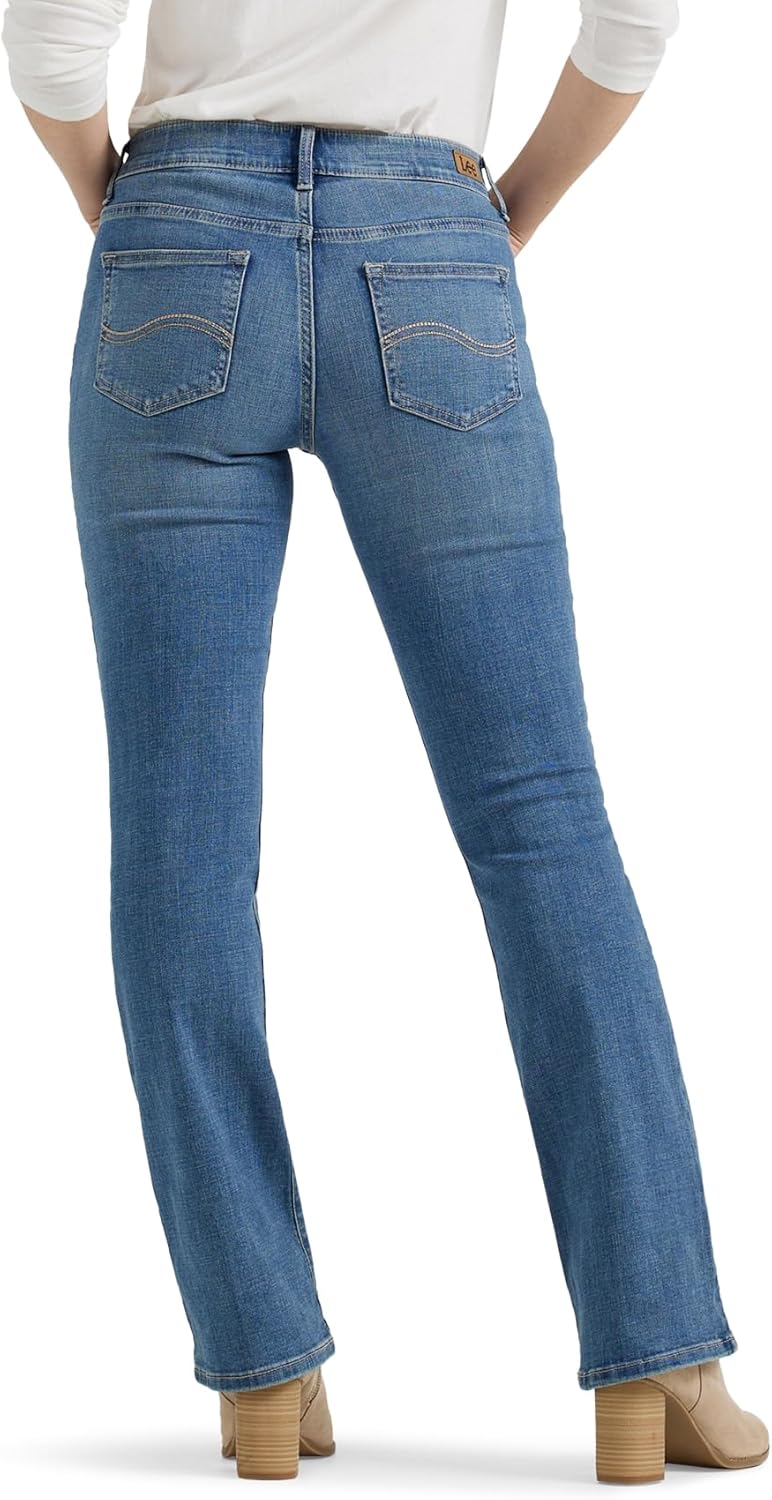
You know that feeling when you spot a pair of wide-leg flares on someone and they look absolutely transformative — elongated leg, balanced silhouette, the whole thing — and then you try on what seems like the same cut and you just look… swamped? That gap between “looks incredible on the rack” and “works for my body” is almost always a proportion problem, not a taste problem. Bootcut and flare jeans (styles where the leg is fitted through the thigh and hip, then gradually or dramatically widens below the knee) are uniquely sensitive to the relationship between your hip width and the hem circumference — the measurement around the very bottom of the leg opening. Get that relationship right and the jeans visually anchor your silhouette and add leg length. Get it wrong by even a few inches and the same cut reads as boxy or off. This guide gives you the decision framework — measurements, tradeoffs, brand callouts, and a clear “if X, then Y” rulebook — to get it right before you buy.
The Core Geometry: Why Hem Opening Is the Variable That Actually Matters
Most proportion advice you’ll read online treats jeans as a style category — “flares are great for hourglass figures” — without explaining why. The reason is pure geometry, and once you see it, you can’t un-see it.
The visual goal of a bootcut or flare silhouette is to create a continuous diagonal line from the widest point of your hip down to the floor. That diagonal creates the illusion of a longer, leaner leg. The angle of that diagonal is determined by two numbers: your hip circumference (measured at the fullest point, usually 7–9 inches below your natural waist) and the hem opening of the specific jean you’re considering.
- Bootcut hem openings typically run 16–18 inches in circumference (measured flat, doubled). That’s a modest flare — just enough to clear a boot heel, hence the name.
- Kick flare / crop flare openings sit at 18–22 inches. The flare is more dramatic but still controlled.
- Disco/70s flare openings run 22–28 inches or more. This is a statement silhouette.
Here’s the math that nobody puts in a product listing: the wider your hips, the more hem opening you need to maintain that diagonal line. If you have a 42-inch hip and you put on a bootcut with a 16-inch hem opening, the line from hip to hem actually angles inward — the opposite of what you want. It visually shortens the leg and emphasizes hip width rather than elongating past it. A 22-inch hem on the same body starts to angle outward correctly.
Per styling guidance from Who What Wear’s stylist roundup, the general rule is that the hem opening should be at least as wide as the difference between your hip and thigh at mid-leg to create a neutral line, and ideally slightly wider to create the elongating effect.
The Decision Matrix: Hip Width vs. Hem Opening
Here’s the framework condensed:
By the numbers — recommended minimum hem opening by hip circumference:
| Hip circumference | Bootcut (works) | Kick flare (sweet spot) | Disco flare (statement) |
|---|---|---|---|
| Under 38” | 15–16” hem | 18–20” hem | 22”+ hem |
| 38–42” | 17–18” hem | 20–22” hem | 24”+ hem |
| 42–46” | 18–20” hem | 22–24” hem | 26”+ hem |
| 46”+ | 20”+ hem | 24–26” hem | 28”+ hem |
Hem openings above are measured as the full circumference of the flat hem doubled — confirm with brand size charts or customer service, as some brands list “leg opening” as the flat measurement only (half the circumference).
The Cut’s fit guide recommends always double-checking whether a brand’s listed leg opening is the full circumference or the half-measurement, because the two systems are common enough that confusion costs returns.
Brand-by-Brand: What the Spec Sheets and Owner Reports Actually Show
Understanding the geometry is half the battle. The other half is knowing which brands consistently publish reliable spec data and which cuts are actually constructed to deliver the intended proportion effect.
Entry to Mid-Tier ($60–$180)
AGOLDE has built a strong reputation for publishing accurate leg-opening measurements across their straight and flare cuts. Reviewers on Nordstrom consistently note that the ’90s Flare and the Lana runs true to the published specs — a meaningful detail when you’re buying online. The Lana Mid Rise Flare, for example, carries a 20-inch hem opening in most sizes, which positions it squarely in the kick-flare sweet spot for hips in the 38–44-inch range.
Madewell’s Flare jean gets called out repeatedly in Refinery29’s bootcut styling guide as a reliable entry-level option precisely because the inseam and hem measurements are stable across the size run — meaning the proportion math you do in a size 26 holds in a size 31. That consistency matters more than most shoppers realize. Size grading (the process of scaling patterns up and down) often distorts hem openings: a hem that’s proportional at a size 2 may be too narrow relative to hip width by a size 14 if the grading isn’t done carefully.
Mid-Tier ($150–$280)
Frame’s Le High Flare is one of the most owner-reviewed flares at this price point, and the consensus on Nordstrom and Shopbop reviews is consistent: the 22–23-inch hem opening (size-dependent) reads as a true ‘70s-leaning flare rather than a conservative kick, which means it flatters wide-hip proportions especially well. Owners with 40”+ hips regularly describe the silhouette as the most leg-lengthening they’ve tried. The tradeoff: the high rise (10.5–11 inches front rise on most sizes) requires a longer torso or high-waisted styling to avoid looking truncated through the midsection.
Paige’s Laurel Canyon and Vintage Flare both clock in with hem openings in the 20–24-inch range depending on the wash. Harper’s Bazaar’s flare jeans guide specifically flags the Laurel Canyon as a strong option for petite frames with wider hips because the proportional flare-to-rise ratio mimics the effect of higher-end construction. One owner-review pattern worth noting: the stretch content (typically 2–3% elastane in Paige’s flares) means the hem opening can run slightly smaller after washing than the listed spec — account for a half-inch to full inch of shrinkage on the first hot wash.
AG Adriano Goldschmied’s Farrah Boot and Farrah Flare cuts are frequently cited in Heddels’ accessible denim coverage as the clearest example of a mid-tier brand that gets inseam-to-hem ratio right. The Farrah Boot’s 17.5-inch hem makes it a true bootcut rather than a flare — correct choice for narrower hips or anyone who wants proportion correction without a dramatic statement, and a wrong choice (as the geometry above shows) for hips above 42 inches.
Premium and Investment Tier ($280–$600+)
Citizens of Humanity’s Horseshoe and Annina Ultra Wide offerings attract the most detailed owner commentary at this tier — and the pattern is clear: construction quality means the hem opening doesn’t distort across the size run the way it does in cheaper grading. Owners with 44”+ hips report that the Annina, with a hem opening that reviewers measure consistently at 26–28 inches, delivers the full diagonal line effect even at larger proportions. The tradeoff is price and fit-through-the-thigh: the Annina is cut for a straighter thigh than the Horseshoe, so owners with fuller thighs consistently recommend sizing up one and tailoring the waist.
Rag & Bone’s Peyton boot and Casey flare sit at the more structured end of the premium market. Vogue’s flare jean roundup notes that Rag & Bone’s denim tends to run slightly narrower through the hem than competitors at the same price — deliberate construction for a cleaner, more tailored silhouette, but worth measuring against your hip-to-hem ratio before buying. If you’re above 42 inches through the hips, reviewers commonly report the Casey reads more as a kick flare than the full ’70s flare it’s marketed as.
The Fit Variables Nobody Talks About: Rise, Inseam, and Fabric Weight
Hem opening is the primary lever, but three secondary variables shape the final proportion equation.
Rise (the measurement from the crotch seam to the top of the waistband, measured front and center) affects where the fitted-to-flared transition appears on your leg. A mid-rise (9–10 inch) bootcut transitions to flare lower on the thigh, which can shorten the visible leg. A high-rise (10.5–11.5 inch) version of the same hem opening transitions higher, creating more leg length below the flare point. If you’re petite — under 5’4” — this single variable often matters more than the hem opening itself.
Inseam is where petite shoppers consistently get tripped up. A 32-inch inseam on a flare jean worn by a 5’4” frame will pool or bunch at the hem, which compresses the silhouette and erases the proportion gain you engineered. Cropped flares (26–28-inch inseam) are often the correct answer, not a compromise — they expose the ankle and maintain the silhouette. The Cut’s measuring guide recommends measuring your own inseam in bare feet before filtering any online shopping by cut.
Fabric weight and stretch content interact with hem behavior in ways that owner reviews surface clearly. Heavier denim (12 oz and above — Heddels’ glossary defines fabric weight as the ounces per square yard of finished fabric) holds the flare shape as designed. Lighter, stretchier constructions (under 10 oz, 2–4% elastane) tend to soften and compress at the hem over time, gradually reducing the hem opening below spec. If the proportion math is tight for your hip width — say, you’re right at the boundary between a kick flare and a full flare — choose the heavier fabric construction to ensure the hem stays where the spec says it should.
The Decision Rules: If X, Then Y
You’ve done the measurement work. Here’s how to apply it:
If your hip circumference is under 38 inches: A true bootcut (16–17-inch hem) works proportionally. You have the most flexibility — the entry-level cuts from AGOLDE and Madewell will deliver the correct diagonal line without oversizing the hem.
If your hip circumference is 38–44 inches: Skip standard bootcuts. You need a minimum 20-inch hem opening (kick flare territory) for a neutral line, and 22–24 inches for the elongating effect. Frame Le High Flare and Paige Vintage Flare are well-matched to this range based on published specs and owner reports.
If your hip circumference is 44 inches or above: Bootcuts are a proportion mismatch — the math is working against you. Prioritize 24-inch+ hem openings. Citizens of Humanity’s Annina and wide-leg flares from Frame and AG’s wider cuts are the options owners in this range consistently flag as delivering the intended silhouette.
If you’re petite (under 5’4”): Filter for cropped or short inseam options first, then apply the hem-opening logic above. The inseam variable will override every other proportion decision if you don’t address it.
If you’re buying at the premium tier ($300+) and the fit-through-thigh is uncertain: Size to your hip measurement, buy with a return window, and budget a one-time $30–$50 tailor visit for waist suppression. The construction quality at this price point makes tailoring cost-effective over a 5+ year wear cycle.
The geometry here isn’t complicated — it’s just rarely spelled out. Match your hem opening to your hip width, account for rise and inseam for your height, and let fabric weight hold the shape. That’s the whole playbook.