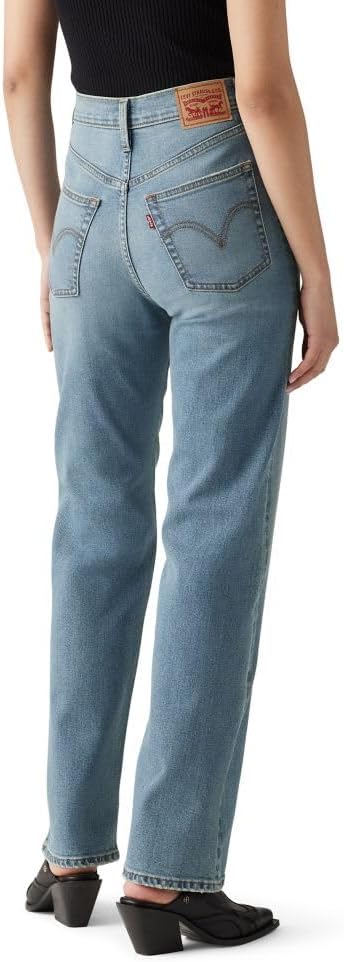
You know that feeling when you find a pair of straight-leg jeans that looks incredible on the model but arrives at your door and does something completely different to your silhouette? It’s not a sizing failure — it’s a proportion mismatch. High-rise straight-leg jeans (the “high-rise” means the waistband sits at or above your natural waist, roughly two to four inches above your hip bone, rather than across it or below it) are genuinely one of the most versatile cuts ever made. But “versatile” doesn’t mean “one-size-fits-all proportions.” The leg opening width, the rise measurement, the inseam length, and where the hem lands on your leg all interact. Get one variable wrong and the whole silhouette works against you. Get them right and this is the pair you’ll reach for three days a week for the next five years. This guide breaks the formula into measurable decisions so you can walk into a purchase — or close an online cart — with confidence.
The Four Variables That Actually Control How High-Rise Straights Look on You
Most fit guides stop at waist and inseam. That’s necessary but nowhere near sufficient for this cut. Heddels’ anatomy-of-a-jean explainer identifies rise, inseam, leg opening, and thigh circumference as the four interdependent dimensions that determine whether a straight leg reads “effortlessly elongating” or “cut off at the worst possible point.” Here’s how to think about each one in relation to your own proportions.
1. Rise: The Real Starting Point
The rise is measured from the bottom of the crotch seam to the top of the waistband. A “high rise” in contemporary denim is typically 10.5 to 12.5 inches. Ultra-high or “super-rise” versions from brands like AGOLDE and Citizens of Humanity often push to 12–13 inches. Why does this matter for proportion? If you have a longer torso, a rise below 11 inches will sit closer to your natural waist than you expect and won’t deliver the waist-defining effect the cut promises. If you have a shorter torso, a 12.5-inch rise can hit uncomfortably close to your ribcage and compress rather than elongate. The target: your waistband should sit 1–1.5 inches below your navel. Measure that distance on your own body first, then cross-reference the brand’s published rise spec — not just the size chart’s generic “high rise” label.
2. Leg Opening: The Width That Sets the Visual Line
Straight-leg jeans have a consistent width from the knee to the hem, as opposed to a skinny (which tapers) or a wide-leg (which flares). But “consistent” covers a range: reviewers at Who What Wear and Harper’s Bazaar both flag that leg openings across brands labeled “straight” run from roughly 13 inches to 17 inches at the hem. That 4-inch spread is enormous in visual terms. A 13–14-inch opening reads closer to a slim-straight or relaxed skinny; a 16–17-inch opening approaches a tailored wide-leg. The proportion rule: match the leg opening to your shoe silhouette and your hip-to-knee width. Narrower hips pair more cleanly with 13–15-inch openings. Fuller hips and thighs balance better with 15–17-inch openings because the parallel line of the leg doesn’t pinch at the knee and then gap dramatically.
3. Thigh Circumference: The Fit Point Nobody Checks
Owners on both Frame and AG Adriano Goldschmied consistently report that “fits fine in the waist, pulls at the thigh” is the most common return reason for straight-leg jeans. Most size charts publish waist and hip measurements. Few publish thigh circumference. Heddels recommends adding 2–3 inches of ease to your measured thigh circumference and comparing that to the brand’s spec sheet (when available). For brands that don’t publish thigh specs — which is most of them — reading aggregated owner reviews filtered by “muscular thighs,” “athletic build,” or “thicker thighs” gives you the real-world signal. Refinery29’s fit-math piece on high-waisted jeans notes that the thigh fit point is where stretch content becomes most consequential: a 1–2% elastane blend adds about half a size of thigh ease without changing the visual line.
4. Inseam and Hem Landing: The Visual Length Multiplier
Where the hem falls on your leg determines how much of the elongating effect of a straight leg you actually capture. Vogue’s assessment of why straight-leg jeans are “the hardest-working pair in your wardrobe” specifically calls out hem landing as the make-or-break detail: ankle-grazing hems (29–30 inch inseam on most bodies) maximize leg length. A full break at the top of the shoe shortens the visual line but creates a more relaxed, fashion-editorial look. The widely-cited rule from stylists surveyed in Who What Wear: if your goal is elongation, the hem should graze the ankle bone or hit 0.5 inch above it. If you’re styling with heels, you can go 0.5–1 inch shorter and let the shoe carry the line.
By the Numbers: Proportion Targets by Body Proportion Type
| Proportion Profile | Rise Target | Leg Opening Target | Inseam Strategy |
|---|---|---|---|
| Short torso / long legs | 10.5–11.5 in | 14–16 in | Full inseam (32–34 in); avoid cropping |
| Long torso / shorter legs | 11.5–12.5 in | 13–15 in | Crop or hem to ankle-graze (27–29 in) |
| Fuller hips & thighs | 11–12.5 in | 15–17 in | Match inseam to shoe height |
| Narrow hips, athletic | 10.5–12 in | 13–15 in | Ankle-graze or slight break |
These targets are derived from published stylist guidance at Harper’s Bazaar, Who What Wear, and Refinery29 — not a universal guarantee, but a tighter starting point than “find your waist size and guess.”
How Brands Actually Stack Up Against the Formula
This is where knowing the language stops being enough and building intuition starts. Different brands engineer their straight-leg jeans toward different proportion assumptions, and understanding those assumptions tells you which pair to try first — before you’ve ordered anything.
AGOLDE (mid-tier, $198–$268): The 90s Pinch Waist and the Riley crop are built on a high-to-ultra-high rise (11.5–12.5 inches published) and a 14–15-inch leg opening. Reviewers consistently describe AGOLDE as cutting long in the torso, meaning shorter-torso wearers should size up rather than down to avoid the waistband hitting the ribcage. The stretch content is minimal (98–100% cotton on most styles), so the thigh ease runs close to zero — athletic thighs will feel that. Owners in aggregated reviews on Nordstrom and the brand’s own site flag this consistently.
Frame (mid-to-upper-tier, $198–$328): The Le High Straight runs a more conventional 11–11.5-inch rise and a generous 15–16-inch leg opening, which is why it gets recommended so frequently as the “safest” straight leg across body types. Published specs confirm a small amount of elastane (1–2%) in most fabrications. Harper’s Bazaar has cited Frame’s Le High Straight multiple times when discussing jeans that work for straight-up-and-down proportions specifically because the leg opening doesn’t require much hip-to-hem balancing.
Citizens of Humanity (upper-tier, $238–$368): The Libby and the Annina cut slightly differently — the Libby is a high-rise relaxed straight (leg opening 16–17 inches), the Annina is a tailored straight with a slimmer 14-inch opening. Both run with a 11.5–12-inch rise. Owners consistently describe Citizens as cutting generously through the thigh and hip compared to Frame or AGOLDE at the same waist size — useful information if thigh fit is your friction point.
Paige (mid-tier, $199–$279): Paige’s Transcend fabric (their proprietary stretch blend) makes their straight legs among the most forgiving in the thigh, which is why Refinery29 has pointed to Paige as the practical recommendation for readers who want a straight-leg profile without committing to rigid denim. The tradeoff: more stretch content means the leg opening can relax wider after a few hours of wear than the spec suggests.
Japanese selvedge (upper-tier to collector, $280–$600+): Oni Denim, Samurai Jeans, and heritage-focused cuts from Self Edge and Blue in Green are built on rigid or sanforized (pre-shrunk) cotton with zero stretch. The leg opening and rise are fixed — what you see is what you wear after the first wash settles the fabric. Denimhunters’ editorial guidance on selvedge fitting consistently recommends sizing up one waist size from your stretch-denim size to account for the absence of give, then planning a hem alteration after the first wash establishes the true inseam. For selvedge buyers, the proportion formula still applies — but you’re applying it to a post-wash measurement, not a fresh-off-the-shelf one.
The Decision Rule
Here’s the “if X, then Y” framework that consolidates everything above:
If your primary friction point is rise and torso length: Start with published rise specs before anything else. Filter to brands that publish the actual measurement (not just “high rise” as a category label), and cross-check against your navel-to-waistband target distance. Frame and Citizens publish reliable specs; AGOLDE’s rise runs long.
If your primary friction point is thigh fit: Prioritize brands with at least 1% elastane (Frame, Paige) and read aggregated owner reviews filtered by build descriptions similar to yours. Plan to size up in waist if you’re on the edge.
If your primary friction point is leg length and hem landing: Buy at your natural inseam or longer, plan a $15–$25 hem alteration after the first wear, and don’t trust “cropped” labeling to hit the same place on your body as it does on the model.
If you’re buying selvedge: Size up one waist, budget for a hem, and measure again post-wash before committing to the final inseam. The fabric will tell you where it wants to sit.
The math here isn’t complicated — it just requires knowing which number to check before the others. Once you’ve run it once, you’ll spend less time returning jeans and more time actually wearing them.