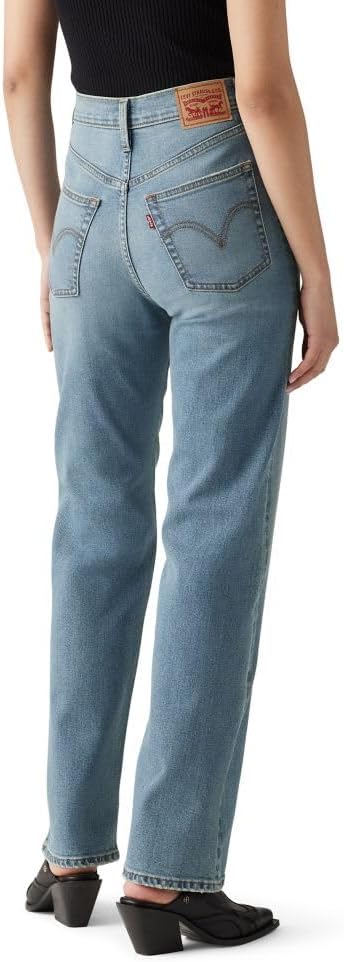
You know that feeling when you’re staring at two pairs of straight-leg jeans — both under $100, both from brands your grandmother would recognize — and you genuinely cannot figure out which one is worth your money? That’s the Levi’s-versus-Lee problem in a nutshell. A straight-leg jean is exactly what it sounds like: the leg opening is roughly the same width from the knee to the hem, giving you a clean, column-like line that flatters most body proportions and transitions easily from casual to dressed-up. It’s the cut that never fully goes away because it never fully commits to a trend. Both Levi’s and Lee have been making this silhouette for over a century, and both sell current versions for somewhere between $40 and $80 at mass retail — which is where the comparison gets genuinely interesting. This guide walks you through fabric construction, fit architecture, sizing quirks, and cost-per-wear math so you can make the call with confidence rather than guesswork.
Where These Two Brands Actually Diverge
On the surface, Levi’s and Lee look like the same product wearing different pocket stitching. Both are American heritage brands, both manufacture most of their current retail lines overseas, and both anchor their straight-leg offerings in cotton-dominant denim that runs between 11 and 13 oz. per square yard — that’s the fabric weight measurement, meaning heavier numbers indicate denser, more structured denim that holds its shape better and typically fades more dramatically over time.
But reviewers and long-term owners consistently surface a meaningful difference in fit philosophy. Levi’s straight-leg cuts — particularly the 501 Original and the Levi’s 94 Baggy Straight — are built around a higher rise (the distance from the crotch seam to the top of the waistband) and a roomier thigh block. That architecture traces back to the 501’s workwear roots. Heddels, in their long-running “Levi’s 501 Original Fit Review,” notes that the jean is intentionally sized for ease of movement rather than a tailored silhouette. The tradeoff: if you have a narrow hip-to-waist ratio, you’ll often be deciding between a waistband that fits and a thigh that swims, or vice versa.
Lee’s flagship straight-leg entry, the Lee Regular Fit Straight and the Lee Legendary Straight, trends toward a mid-rise cut with a slightly tapered thigh — not skinny, but shaped. Denimhunters, in their brand history feature “A Brief History of Lee Jeans,” points out that the company built its early reputation on the sanforized process (pre-shrinking the fabric so the finished jean doesn’t shrink dramatically after the first wash) and on fit engineering that competed directly with Levi’s for the workwear customer. That heritage shows up in the current product: Lee owners consistently report that the waistband and hip measurements sit closer together, making it a better cold-start fit for people with a straighter hip-to-waist ratio.
Fabric, Construction, and What the Numbers Actually Mean
This is where being a practitioner pays off. Both brands offer a mix of rigid (no stretch) and stretch-blend options, and the fabric choice matters more than the brand name for daily wearability.
Current retail specs at a glance (May 2026):
| Spec | Levi’s 501 Original (Rigid) | Lee Legendary Straight (Rigid) | Lee Slim Straight w/ Flex |
|---|---|---|---|
| Approx. retail price | $69–$79 | $44–$59 | $44–$59 |
| Cotton content | 100% | ~99% / 1% elastane | 77% / 23% stretch blend |
| Reported fabric weight | ~12 oz. | ~11.5 oz. | ~10 oz. |
| Rise category | High | Mid | Mid |
| Shrinkage pre-treatment | Sanforized | Sanforized | Sanforized |
The Levi’s 501 is a rigid jean — no elastane, no give. Owners who wear it consistently report a break-in period of several weeks before it conforms to the body, and it rewards that patience with a more individualized fit over time. If you have a background in premium selvedge denim, this behavior will feel familiar. If you’re used to stretch denim, it will feel stiff and unforgiving at first wear.
Lee’s Legendary Straight is closer to a traditional rigid build, while the Flex-to-Go and Slim Straight lines incorporate meaningful stretch. Refinery29, in their feature “We Compared Every Affordable Straight-Leg Jean — Here Are the Winners,” noted that Lee’s stretch options consistently ranked higher for immediate out-of-the-box comfort, while Levi’s rigid cuts ranked higher for perceived quality and durability among reviewers who wore them for six months or more.
Who What Wear, in their “Best Straight-Leg Jeans of 2025” guide, echoes this split: Levi’s tends to appear in the “investment under $100” tier, while Lee tends to anchor the “accessible everyday” tier — a distinction that’s about positioning as much as construction quality.
Fit by Proportion: Three Scenarios with Clear Recommendations
The editorial coverage is consistent enough to build reliable decision rules here. Across aggregated owner reviews and editorial comparisons — including Consumer Reports’ “Denim Durability and Fit Satisfaction Survey” — three fit scenarios keep surfacing. Each maps to a distinct tier of buyer.
High-Rise, Generous Thigh: The Case for Levi’s 501
If you carry volume in the hip and thigh relative to your waist, the Levi’s 501 Original or the Levi’s 94 Baggy Straight is the more forgiving choice. The higher rise and generous thigh block accommodate that proportion without creating excess fabric at the knee. The tradeoff is that the waistband will likely need a belt, and the break-in period is real — plan for two to three weeks of regular wear before the denim relaxes into your shape.
One underrated fit detail: leg opening width. The 501’s hem measures around 15–16 inches in most sizes, which reads as a genuine straight leg. If you’re styling these with chunky boots or loafers, that opening gives you room to layer over footwear without bunching. Heddels’ “Levi’s 501 Original Fit Review” consistently flags this as one of the 501’s practical advantages over narrower straight cuts.
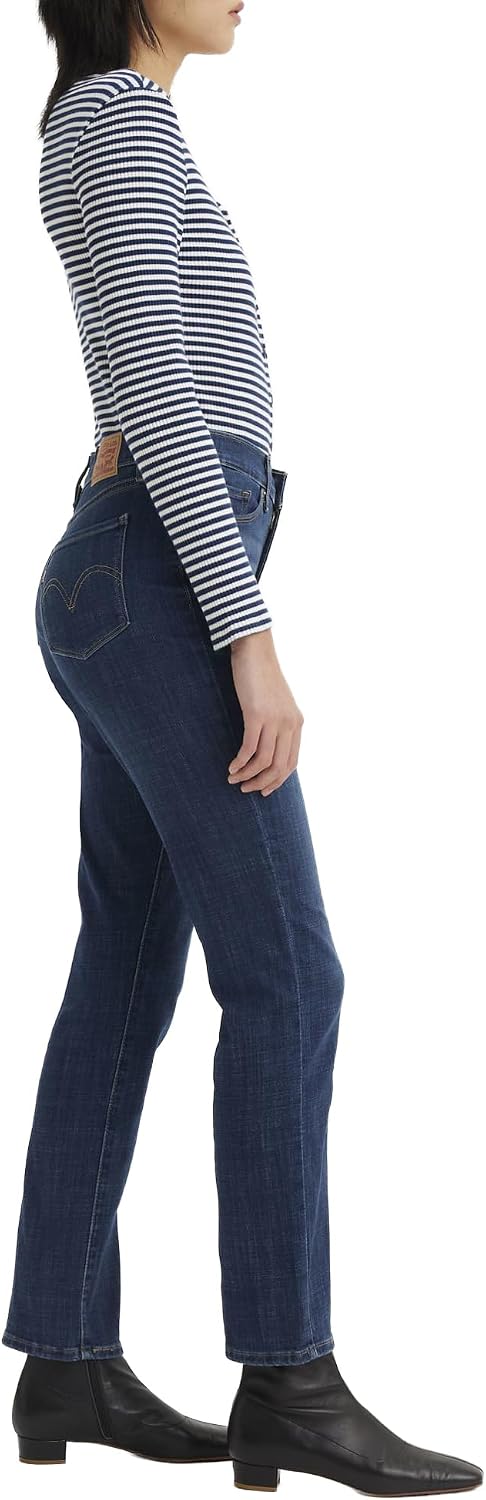
Levi's
$26.36
In stock on Amazon
Check price on AmazonMid-Rise, Straight Silhouette: The Case for Lee Legendary Straight
If your hip and waist measurements are within 8–10 inches of each other, Lee’s Regular Fit Straight or Legendary Straight is likely to give you a cleaner line with less alteration anxiety. The mid-rise sits below the natural waist, which can also be more comfortable for sitting at a desk all day. Lee’s leg opening tends to measure closer to 14.5 inches — straight but not wide, which reads neatly on a leaner leg without the excess that can make the 501 look sloppy on narrower frames.
The mid-rise architecture is also friendlier to the hip-flexor range of motion that desk workers notice after five hours in a chair. Refinery29’s affordable straight-leg roundup flagged this as a consistent differentiator in their comfort scoring: Lee’s mid-rise cuts scored meaningfully higher on all-day wearability ratings than the 501’s high-rise block.
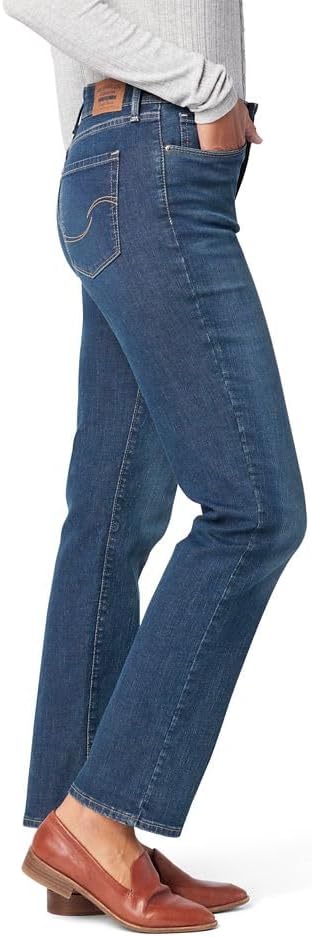
Levi
$25.49
In stock on Amazon
Check price on AmazonPetite Sizing and Shorter Inseams
If you’re 5’4” and under or need a shorter inseam in the core size run, both brands offer dedicated petite sizing in their straight-leg cuts — but the accessible selection differs in practice. Lee’s petite range tends to run deeper at mass retail locations. Levi’s petite options are available but can be harder to find in-store across the full range of washes; the online selection is considerably broader. Who What Wear’s 2025 straight-leg guide noted that petite shoppers reported more consistent in-store success with Lee than with Levi’s across major retail chains.
For this shopper, the practical advice is to start with Lee at retail and supplement with Levi’s petite options online where the depth of stock is better. Either brand’s petite straight-leg is a legitimate choice once you’ve confirmed the inseam length works — the fit architecture differences described above still apply at petite sizing.
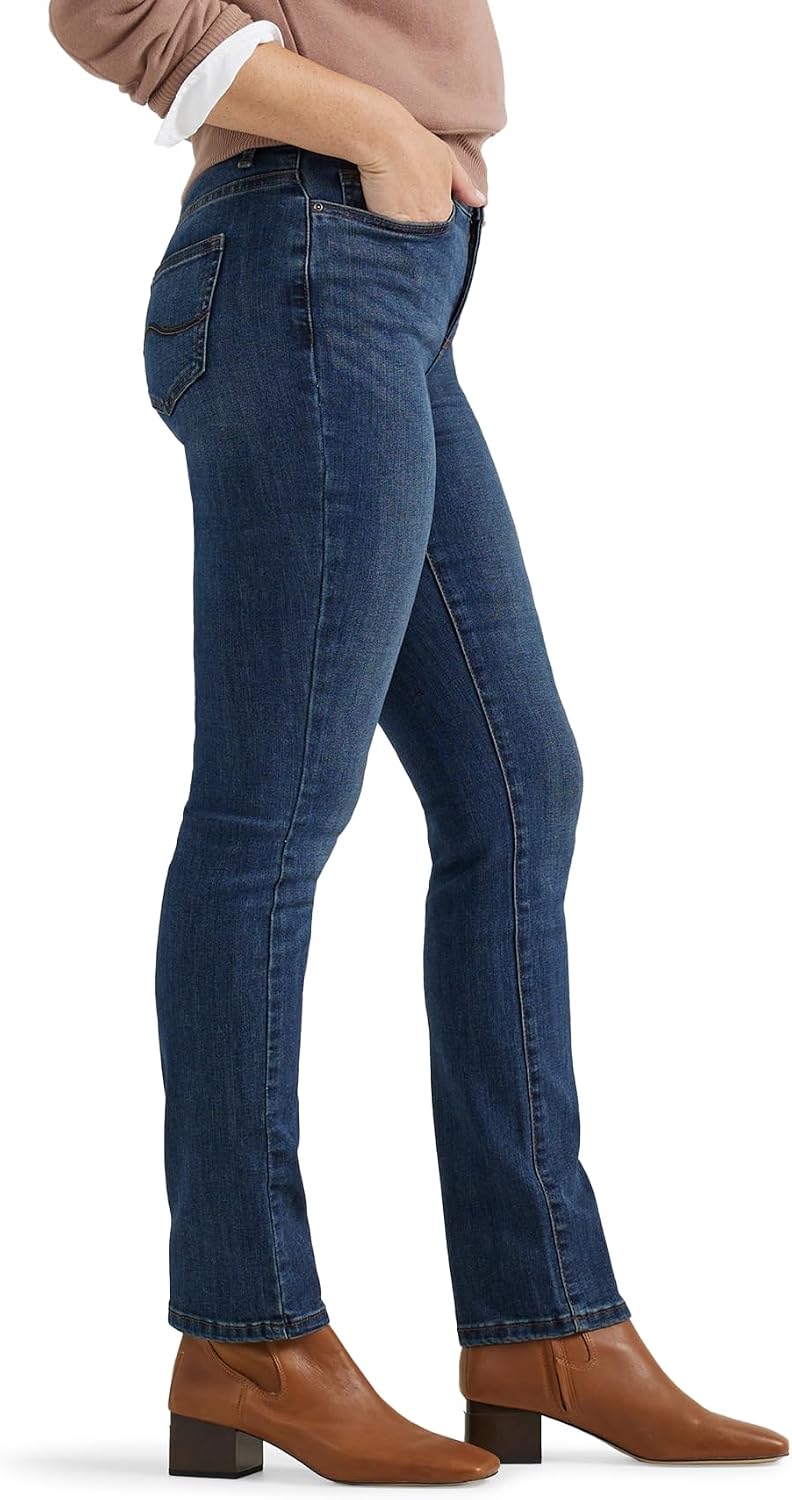
Lee
$20.80
In stock on Amazon
Check price on AmazonCost-Per-Wear: Where the Value Math Lands
Cost-per-wear means dividing the price you paid by the number of times you’ll actually wear the item before it’s worn out or out of rotation. A $75 pair worn 150 times costs $0.50 per wear. A $45 pair worn 40 times before the inseam blows out costs $1.13 per wear — a worse deal despite the lower sticker price.
The durability question is where Levi’s has a documented edge in long-term owner reviews. The 501’s construction — heavier fabric weight, bar-tacked stress points, and 100% cotton that develops a patina over time — gives it a longer projected lifespan. Owners routinely report five to seven years of regular wear before meaningful deterioration. Consumer Reports’ “Denim Durability and Fit Satisfaction Survey” places the 501’s long-term durability scores above the Lee everyday retail line, which drew owner reports of inseam wear and back-pocket stress more commonly in the two-to-four-year range under regular rotation.
Run the math on two realistic scenarios:
- Levi’s 501 at $75, worn 180 times over 5 years: $0.42 per wear
- Lee Regular Fit Straight at $48, worn 90 times over 3 years: $0.53 per wear
That gap is narrow enough that Lee wins on accessibility and immediate comfort. It widens when you factor in alteration costs — if the 501’s waistband fits but the hem needs shortening, add $15–$20 to the Levi’s total. The honest version of the cost-per-wear argument here isn’t “Levi’s always wins.” It’s that Levi’s wins on durability cost-per-wear if the fit works for you without significant alteration. Lee wins on immediate value and fit satisfaction for body proportions that the mid-rise, slightly tapered architecture serves well.
The Clear Decision Rules
If you’ve read this far, you’re probably sitting with a specific scenario in mind. Here’s the clean version.
If you want a rigid, high-rise straight leg with maximum long-term durability and you’re willing to break it in: Buy the Levi’s 501. It’s the better long-run value and the more characterful jean — it will fade and conform in a way that Lee’s current retail line won’t match. Budget for a belt and several weeks of stiff-denim adjustment.
If you want immediate comfort, a mid-rise that works for a desk job, and a price point under $55: Buy Lee’s Legendary Straight or the Lee Regular Fit Straight. The fit-out-of-the-box experience is consistently rated higher, and the lower price floor makes a second pair in a different wash a realistic option without stretching the budget.
If you’re buying for a petite frame or need a shorter inseam in the core size run: Start with Lee at retail, then compare Levi’s petite options online where the selection is deeper than in-store.
If you’re coming from premium denim ($150+) and want a budget straight-leg that feels closest to that build quality: The Levi’s 501 rigid is the more honest comparison to a mid-tier heritage jean. Lee’s stretch options, while excellent for what they are, read as contemporary comfort-focused construction next to a premium piece — not a criticism, just an honest positioning note that Who What Wear’s tiering framework reflects consistently in their annual denim roundups.
Both brands have earned their place in the American denim canon. The choice between them isn’t about which one is better — it’s about which fit architecture and wearing experience matches the actual life you’re buying jeans for.