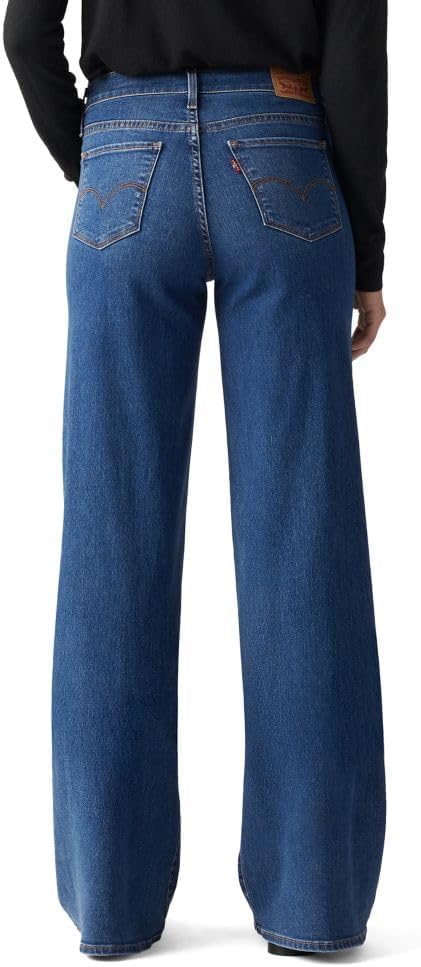
You know that feeling when you spot a wide-leg jean on someone in the wild — the proportions look exactly right — and then you try a seemingly identical pair and it just doesn’t land the same way? That’s not bad luck. It’s silhouette science, and once you understand the three variables doing the work (rise, which is the distance from the crotch seam to the waistband; leg opening, measured in inches at the hem; and fabric weight, usually expressed in ounces per square yard), you stop gambling at checkout and start making deliberate decisions. This guide is for readers who already know their way around a size chart and have probably returned at least one wide-leg pair for reasons they couldn’t fully articulate. We’re going to name those reasons, show the math behind proportional balance, and map the decision against the real pricing landscape — where the most consequential choices live in a surprisingly tight $25–$45 band of key measurements, not dollars.
What “Wide-Leg” and “Baggy” Actually Mean (and Why the Distinction Matters)
The retail world uses these terms interchangeably, but they describe meaningfully different silhouettes with different fit logic. Getting this straight before you evaluate any specific pair saves you a return.
Wide-leg jeans are defined primarily by their leg opening — typically 17 to 22 inches at the hem — but they maintain a relatively fitted or tailored seat and thigh. The drama is concentrated below the knee. Think of the silhouette as an inverted A-line: structured through the hip, then deliberately flared. Who What Wear’s 2025 ranking of wide-leg fits consistently identifies high-rise + controlled thigh + 18–20 inch opening as the “sweet spot” for elongating most proportions.
Baggy jeans, by contrast, introduce volume earlier — through the seat, thigh, and sometimes even the knee — with a leg opening that often ranges from 16 to 20 inches. The relaxed fit through the upper leg is the defining feature, not the hem width. Vogue’s 2025 coverage of the baggy-jean trend notes that the most flattering iterations still taper slightly from the knee down, preserving enough shape to read as intentional rather than accidental.
The practical implication: if you’re shopping for elongation (visually lengthening the leg), you want wide-leg with a high rise and a controlled thigh. If you’re shopping for ease and a vintage-borrowed aesthetic, you want a true baggy that sits lower in the seat. Mixing up the category means shopping for the wrong specs entirely.
The Three-Variable Framework: Rise × Leg Opening × Fabric Weight
Here’s where the “investment window” of the title comes in — and it’s not about dollars. The $25–$45 range refers to measurements: specifically, the 25-inch inseam on petite frames through the 45-inch hip circumference where proportional tradeoffs become most acute. Inside that measurement window, small spec differences produce outsized silhouette changes.
Rise: The Proportional Anchor
Rise is the most underrated fit variable in the wide-leg category. Denim Hunters’ overview of rise variations explains the mechanical reason: a higher rise (10.5 inches and above, measured front) lifts the visual waistline, which gives the wide leg more “column” to work with and prevents the silhouette from reading as bottom-heavy.
The decision rule is simple:
- Inseam under 29 inches → prioritize rise of 11 inches or higher. A wide-leg on a shorter inseam with a mid-rise (9–10 inches) tends to cut the leg at the widest point of the calf, which shortens rather than lengthens.
- Inseam 30–34 inches → 10–12 inch rise works across most leg-opening widths.
- Inseam 34 inches and above → mid-rise wide-leg can work because the raw leg length compensates, but a high rise still elongates proportionally.
Leg Opening: The 18-Inch Threshold
Across aggregated reviews on Who What Wear and Refinery29, a consistent pattern emerges: below 18 inches at the hem, a “wide-leg” reads more like a relaxed straight — not a problem, but a different result than expected. Above 22 inches, the silhouette starts requiring specific footwear (a heeled boot or a chunky platform sneaker) to prevent the hem from overwhelming the foot.
The 18–20 inch zone is the most versatile for most proportions. It reads as clearly wide without demanding a specific shoe, and it works cropped (for petites showing ankle) or full-length.
Fabric Weight: How Drape Changes Everything
This is the variable most buyers ignore until they’ve made one expensive mistake. Heddels’ denim dictionary distinguishes between lightweight (under 11 oz), midweight (11–13 oz), and heavyweight (14 oz and above) fabrics — and the distinction is decisive for wide-leg silhouettes.
- Lightweight (8–10 oz): Creates a flowy, almost trouser-like drape. Flattering but collapses around the ankle and loses structure if the hem isn’t perfectly pressed. Common in polyester-cotton blends at the entry tier.
- Midweight (11–13 oz): The sweet spot for wide-leg construction. Holds the leg opening’s shape without stiffness, drapes well from the hip, and recovers from a day of wear. Most of the durable mid-tier and premium wide-leg options (AGOLDE, Frame, Citizens of Humanity) sit here.
- Heavyweight (14 oz and above): Creates a stiff, architectural leg that’s less forgiving but fades beautifully with wear. More common in selvedge constructions than ready-to-wear wide-legs. If you’re moving toward Japanese heritage denim, this is where the fabric weight conversation intersects with fade potential.
By the Numbers
| Leg Opening | Best For | Watch Out |
|---|---|---|
| Under 18 in | Relaxed-straight aesthetic | Won’t read as “wide-leg” |
| 18–20 in | Most proportions, versatile footwear | — |
| 20–22 in | Tall frames, editorial looks | Needs structured hem |
| Over 22 in | Fashion-forward / costume-adjacent | Specific footwear required |
Tier-by-Tier Decision Map
Entry Tier: $40–$80 (ASOS, Madewell Relaxed, Levi’s)
At this price point, fabric weight is where you feel the compromise most. Levi’s wide-leg offerings at retail frequently spec out at 9–10 oz with stretch content running 2–3% elastane. Owners across review aggregators report good initial shape but note that the leg opening relaxes slightly after 20+ washes. If you’re testing the silhouette before committing upward, that’s a reasonable trade. If you’re expecting the opening to hold its geometry for three years, it won’t.
Decision rule: Buy entry-tier wide-leg if you’re confirming the silhouette works for your proportions and daily wardrobe before investing up. Treat it as a fit audit, not a long-term wardrobe piece.
Mid-Tier: $90–$200 (AGOLDE, Madewell Selvedge Line, Frame)
This is where fabric weight stabilizes in the 11–12 oz range and construction decisions start doing more of the work. AGOLDE’s 90s Pinch Waist and Rialto wide-leg cuts are frequently cited by Refinery29 editors as having the most reliable leg-opening retention through repeated wear — attributed to a midweight non-stretch or minimal-stretch fabric that doesn’t bag out at the knee. Frame’s wide-leg constructions tend to run lighter with more drape, which reads as more elevated but is slightly more demanding of footwear choices.
The mid-tier is also where rise differentiation matters most for bodies in the 25–45-inch measurement window. AGOLDE consistently specs 11.5–12.5 inch front rises across their wide-leg cuts, which is why they work across a wide range of torso proportions without extensive tailoring.
Decision rule: Move to mid-tier when you know the silhouette is correct for your body and you want the fabric weight to do the proportional work reliably over 2–3 years of wear.
Premium Tier: $200–$500+ (Citizens of Humanity, Rag & Bone, Paige)
At the premium level, the wide-leg conversation shifts from “does this silhouette work” to “how does the construction sustain the silhouette.” Citizens of Humanity’s Paloma and Gaucho wide-leg silhouettes are built on heavier-weight denim (frequently 12–13 oz) with a structured waistband construction that keeps rise height consistent across the life of the garment — owners on long-run reviews note that the fit at 18 months is measurably closer to the fit at day one than comparable mid-tier pairs.
For the collector audience moving into selvedge territory: a wide-leg selvedge jean (Oni Denim’s double-face constructions, Samurai Jeans’ relaxed cuts) brings a 14–16 oz fabric weight that creates an entirely different aesthetic — stiff at first, then draping into your personal wear pattern over hundreds of hours of use. The fade potential is the point. If you’re buying a wide-leg selvedge, you’re committing to a years-long relationship with a garment that will eventually look uniquely yours. Blue in Green and Self Edge carry editorial guidance alongside the product for exactly this reason.
Decision rule: Premium wide-leg is justified by cost-per-wear math when you’re wearing the silhouette more than 3x per week and the mid-tier construction is showing wear-pattern degradation (bagging at the knee, rise drop, hem collapse). The premium construction extends the garment’s proportional integrity by 12–24 months, which shifts the cost-per-wear calculation decisively at 3+ years.
The If-Then Summary
The silhouette science here collapses into a clean decision tree if you’re currently sitting with a pair under consideration:
- If you’re under 5’4” and want visual leg length → prioritize rise over 11 inches and a leg opening of 18–20 inches in 11–13 oz fabric. Skip anything under 10.5 inch rise regardless of the opening.
- If you’re between 5’4” and 5’8” and want versatility → the 10–11.5 inch rise range works, and you can stretch to a 20–22 inch opening without the hem becoming a footwear problem.
- If you’re over 5’8” and shopping for an editorial look → mid-rise baggy (not wide-leg) in a 16–18 inch opening gives proportional ease without overwhelming the frame.
- If you’re buying for 3+ years of regular wear → do not buy under 11 oz fabric. The opening will not hold. Move to mid-tier minimum.
- If you’re evaluating selvedge or premium wide-leg → fabric weight and rise spec are the deciding variables, not price. Two pairs at the same price point in the same silhouette with different rise and weight specs will perform as different garments within 12 months of regular wear.
The $25–$45 investment window isn’t a price range. It’s the measurement territory — from a 25-inch inseam to a 45-inch hip — where these spec decisions produce the largest proportional returns. Know your numbers, match them to the framework above, and the silhouette stops being a gamble.